
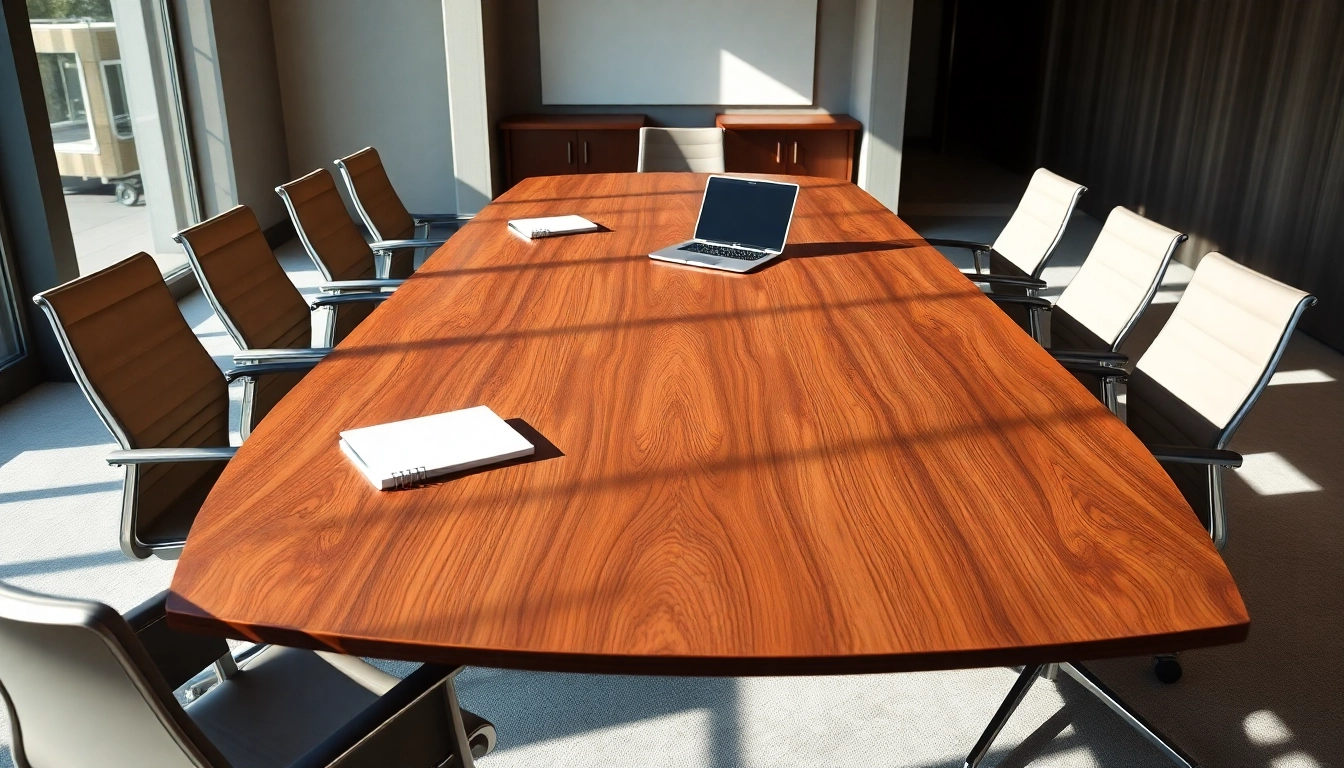
Understanding Custom Conference Tables
In today’s fast-paced business world, the conference room serves as the epicenter of collaboration, innovation, and decision-making. The importance of a well-designed custom conference table cannot be overstated, as it not only facilitates effective communication but also sets the tone for productivity and creativity within the workspace. A Custom conference table is tailored to meet the unique requirements of your business environment, blending aesthetic appeal with functionality. Understanding what these tables are and how they can benefit your organization is the first step toward creating a space that fosters teamwork and engagement.
What is a Custom Conference Table?
A custom conference table is a furniture piece designed specifically for meetings, workshops, and collaborative work sessions. Unlike standardized models, these tables are crafted to reflect the unique needs and branding of a business. They can vary greatly in size, shape, materials, and features, allowing organizations to tailor their conference area to support their operations effectively. With the rise of telecommuting and flexible work arrangements, the design of these tables has evolved to include technological integrations that facilitate both in-person and virtual meetings.
Benefits of Customization in Conference Spaces
The ability to customize conference tables provides several advantages:
- Functionality: Custom tables can be designed to incorporate necessary technology such as power outlets and data ports, which is crucial for presentations and remote collaboration.
- Aesthetic Cohesion: Tailoring the design allows businesses to maintain brand identity through color and material choices, promoting a consistent look throughout the office.
- Optimized Space Utilization: Custom dimensions ensure that the table fits perfectly within the designated space, promoting better flow and accessibility.
How Custom Conference Tables Enhance Productivity
Custom conference tables can significantly enhance productivity within the workplace. An inviting and ergonomically designed table encourages active participation from team members, helping to facilitate brainstorming sessions and collaborative discussions. Furthermore, the integration of technology allows for seamless communication, whether through video conferencing or interactive presentations, thereby removing barriers to effective teamwork.
Materials Used in Crafting Custom Conference Tables
When selecting a custom conference table, the materials used in its construction play a pivotal role in both durability and aesthetic appeal. The choice of wood, metal, and finishes can significantly impact the table’s performance and visual design.
Choosing the Right Wood: Walnut, Maple, and More
Different types of hardwoods offer unique benefits:
- Walnut: Known for its rich color and exceptional grain patterns, walnut is a popular choice for executive conference tables. Its durability and resistance to wear make it ideal for high-traffic environments.
- Maple: This hardwood is valued for its strength and light color, offering a clean aesthetic that can brighten up a room. Maple is also easy to stain, making it versatile for various design schemes.
- Oak: A classic choice, oak is celebrated for its durability and distinctive grain. It is particularly suitable for heavy-use applications where resilience is required.
- Hickory: Known for its hardness and shock resistance, hickory is an excellent option for conference tables that will see considerable wear and tear.
Durability and Sustainability in Material Selection
Beyond aesthetics, the durability of conference table materials is critical. Sustainable sourcing is also becoming increasingly important for businesses seeking environmentally friendly options. Companies can choose woods that are certified by organizations like the Forest Stewardship Council (FSC), ensuring that their furniture is not only beautiful but also responsibly sourced.
The Role of Finishes and Coatings in Table Longevity
Finishes and protective coatings enhance a table’s appearance while extending its lifespan. High-quality finishes can guard against scratches, spills, and heat while enhancing the natural beauty of the wood. Options such as polyurethane or natural oil finishes can be applied to enhance durability, ensuring that the table maintains its luster for years to come.
Design Considerations for Custom Conference Tables
Designing a custom conference table involves thoughtful consideration of various elements, ensuring that the final product meets the specific needs of the workspace.
Size and Shape: Tailoring to Your Space
The size and shape of a conference table should reflect the intended use and the dimensions of the conference room. For example:
- Rectangular Tables: These are ideal for traditional setups and can accommodate many participants, encouraging formal communication.
- Round Tables: This shape promotes equality and collaboration, making it great for brainstorming sessions where everyone’s input is valued.
- U-Shaped or Modular Tables: These configurations encourage interaction and are suitable for presentations and discussions that require engagement from all sides.
Incorporating Technology: Power Integration and More
Modern conference tables often require technological features to support audio-visual needs. Built-in power outlets, USB ports, and cable management systems can be integrated into the design, allowing for clean, unobtrusive access to technology during meetings.
Creating an Aesthetic: Matching Your Office Décor
Creating a cohesive aesthetic is vital in a corporate environment. The finishes, colors, and overall design of a custom conference table should align with the existing office décor. This integration fosters a sense of professionalism and can enhance the brand image presented to clients and visitors.
Ordering Your Custom Conference Table
Understanding the process of ordering a custom conference table can help businesses prepare for their new investment. Knowing what to expect from design to delivery will ensure a smooth experience.
Step-by-Step: From Design to Delivery
The journey of a custom conference table typically follows these steps:
- Initial Consultation: Discuss your needs with a designer to establish the specifications, dimensions, and features that the table will require.
- Design Mockup: Review and refine a digital design that showcases your table’s layout, finish, and customizations.
- Approval and Production: Once finalized, the table enters production, with skilled craftsmen bringing your vision to life.
- Delivery and Installation: Upon completion, the table is delivered and installed in your location, ready for use.
Timeline Expectations for Manufacturing
Businesses should anticipate varying timelines based on the complexity of the design and the current production schedule. Generally, crafting a custom conference table can take anywhere from a few weeks to several months. Establishing clear timelines with your manufacturer ensures that your needs are met efficiently.
How to Request a Custom Quote Effectively
When seeking a quote for a custom conference table, provide as much detail as possible. Include specifications such as size, shape, material choice, finish preferences, and any additional features needed. This comprehensive approach allows manufacturers to offer accurate pricing and timelines, making the process more straightforward.
Future Trends in Conference Table Design for 2026
The world of office furniture design is continuously evolving, and custom conference tables are no exception. As we move towards 2026, several trends are emerging that are set to reshape the landscape.
Innovative Features to Expect in Custom Designs
Expect advances in technology integration, such as wireless charging capabilities and enhanced connectivity features that seamlessly blend into the furniture’s design. Furthermore, multifunctional tables that can easily transform based on the meeting’s needs will likely gain prevalence, promoting adaptability in various formats.
Eco-Friendly Practices in Furniture Manufacturing
Sustainability will continue to be a driving force in furniture design. Emerging companies will prioritize eco-friendly materials, energy-efficient practices, and waste reduction in the manufacturing process, appealing to a more environmentally conscious clientele. Consumers will increasingly demand transparency about sourcing and manufacturing methods.
Adapting to Remote and Hybrid Work Environments
As remote work becomes a staple in many sectors, custom conference tables will evolve to accommodate hybrid office layouts. This may include designs that facilitate both in-person and video conferencing, ensuring that all participants feel equally included. Flexible, modular designs will likely see increased demand as companies adapt to changing workforce needs.